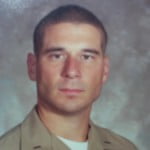


A Brief History
On October 16, 1991, a disturbed man crashed his pick-up truck into a Luby’s cafeteria in Texas, and proceeded to shoot and kill 24 people, including himself. George Hennard wounded another 27 with gunshots, which up until June 11, 2016 had been the worst non-school mass shooting in United States history. (On that day 49 people were gunned down at the Orlando, Florida gay nightclub called “Pulse.”) When Stephen Paddock, age 64, opened fire from the 32nd floor of the Mandalay Bay hotel and casino in Las Vegas on a crowd attending a country music concert and killed 58 people (plus himself) and wounded another 48 or so, the Luby’s and Orlando shootings were eclipsed and America experienced a shocking new low in human depravity. (See our article of October 16, 1991, Worst Non-School Mass Shooting in US History.) The burning question in the collective mind of America, is WHY?
Digging Deeper
Amid the horror shown in graphic detail on the numerous cell phone videos taken at the massacre site, even during the shooting, were numerous examples of heroism by first responders and victims alike. People were saved by others laying their bodies on top of their loved ones, and other risked their lives to pull the wounded to safety. Off duty police and firemen attending the concert behaved heroically, risking their lives to render first aid, evacuate the crowd, and move the wounded to cover. First responders braved intense gunfire to do their jobs, and intense the gunfire was! Paddock had over 40 guns in his hotel suite, of which at least a dozen were equipped with a device called a “bump stock,” a sliding type of stock used on AR-15 style carbines that allow for rapid fire almost as fast as full automatic fire. Listening to the shooting on the various videos sounds very much like full automatic fire. (About 400 rounds per minute cyclic rate as opposed to true full automatic cyclic rate of around 600 rounds per minute. Of course, cyclic rate does not equate to real life amount of bullets launched in a minute, as reloads are necessary.) The use of such a rapid fire device on a legal rifle is pretty much a first during a publicized crime, leading to massive interest in bump stocks. Debate about the need to have such devices legal for purchase began an intense gun control vs. gun rights debate, almost immediately. Millions of internet searches for “bump stock” were made, and stores carrying the slow selling items suddenly found every single one in stock sold. Some stores pulled the devices from their shelves.
Paddock left no manifesto, no YouTube message, no suicide note, and his friends and relatives were unable to provide any sort of definitive motive for his horrible actions. Normally (if you can use the word “normally” in such matters) a mass shooter lets us know exactly who and what he has a beef with. Motive is not ordinarily so elusive. This time, however, federal, state, and local authorities are striving tirelessly to discover whatever sick motive Paddock had.
Stephen Paddock was born in Iowa in 1953, and graduated from California State University (Northridge) with a degree in business administration. He began a 10 year career as a Federal employee in 1975, working as a letter carrier for the Postal Service and as an IRS agent among his government jobs. Living in Southern California, Paddock moved on to work as an auditor in private industry, and ran a real estate business as well. Paddock was successful at real estate, making an estimated $5 to $6 million in profit from the sale of property in 2015. He was also a heavy gambler, with his main focus on video poker, a pursuit he followed for at least 25 years.
Paddock married and divorced twice, moved between California, Texas and Florida, and ended up in Mesquite, Nevada in 2016, only 80 miles from Las Vegas. Paddock retired and lived in Reno and Mesquite with a Filipino girlfriend that he sent away to the Philippines on a trip before his shooting massacre. Paddock had accumulated a massive arsenal of firearms over a period of years, and was known to practice shooting. He rented his suite at the Mandalay Bay a week prior to the shootings, and was seen practicing shooting only 2 days before the massacre. Spending tens of thousands of dollars in the days preceding the shooting, Paddock was accorded VIP status and given his rooms “comp,” free of charge. Paddock prepared his sniper’s nest with two dozen guns, including mostly AR-15 and AK-47 style semi-automatic rifles, many with bump stocks installed, and some with telescopic sights. He even had 2 tripods with telescopic sight equipped rifles for precision shooting. Obviously, he also had thousands of rounds of ammunition, with dozens and dozens of loaded magazines. His car was later found to contain over 1600 rounds of ammunition and explosives, as well. Meticulous in his preparation, Paddock is believed to have reconnoitered another potential massacre site in Chicago, but cancelled that plan when he could not get a room overlooking his planned kill zone. At the Mandalay Bay, Paddock installed cameras to see down the hall in both directions outside his door and through his door peephole. He also barricaded a stairwell door at the end of the hall. When he saw a security guard approaching prior to the shooting, Paddock fired 200 rounds right through his room’s door, wounding the unsuspecting security guard who was not there because of Paddock. Investigators later found in the suite a note paper with calculations concerning range and bullet trajectory so as to maximize Paddock’s accuracy.
About 6 minutes after shooting the security guard, Paddock smashed the windows with a “lump hammer” he brought for that purpose, and began shooting at concert goers at about 10:05 pm, firing for about 10 minutes, with his first shots fired at jet fuel tanks located at the Las Vegas airport about 600 yards away. (One round apparently penetrated a tank, but did not ignite the fuel.) Firing away with .223 (5.56mm) and .308 rifle ammunition, Paddock fired perhaps a few thousand rounds. Not known to have any military or police type training, Paddock had so many weapons ready that when one jammed (a common occurrence using bump stocks) he could just drop the rifle and pick up a fresh one.
The firing stopped about 10:15 after only around 10 minutes of shooting, with police arriving outside his door at about 10:17. Police waited in the hallway until SWAT units arrived an hour later to blow open the door to the suite, finding Paddock dead from a self-inflicted gunshot wound to the head, surrounded by guns, magazines, ammunition, and shell cases all around the room.
Since the shooting, intensive investigation and the interview of anyone that may have known Paddock was feverishly conducted by the police, with hardly a clue found. Preliminary autopsy reports did not indicate a medical or drug related problem, and no clue as to motive has been found. Paddock’s brother and his girlfriend (returned immediately from the Philippines to talk with police) were able to guess a motive. Rumors and reports of secrecy and gambling habits failed to shed light on any motive for the attack. No co-conspirators have been found, and it is unclear whether or not Paddock intended to escape after the shooting. He may have so intended, but the evidence remains inconclusive, in spite of opinions being bandied about. No criminal history or mental illness history has been found, although a tantalizing bit of trivia did surface, with Stephen Paddock’s father once being on the FBI’s most wanted list from 1969 to 1977 (for bank robbery), and had been labeled as a psychopath. The weapons and ammunition all appear to have been legally purchased and nothing known about Paddock would result in him being denied a weapon due to background checks.
For the time being, the worst mass shooting in American history remains largely a mystery as to why it even occurred. The debate over gun control vs. gun rights goes on, and will probably result in some kind of ban or control on devices made to increase the rate of fire of semi-automatic weapons, and the call for “increased background checks!” is already being yelled by gun control groups, although of course such actions would not have prevented this tragedy. The reasons for the shooting are baffling.
Question for students (and subscribers) to ponder: Does psychopathic behavior run in the family? Was there some sort of gambling angle behind the hidden motive? Was there some sort of fatal illness or depression hanging over Stephen Paddock? Who was he mad at? What was he trying to prove? Did he even have a point? Do you have any information about the case or theories?
If you liked this article and would like to receive notification of new articles, please feel welcome to subscribe to History and Headlines by liking us on Facebook and becoming one of our patrons!
Your readership is much appreciated!
Historical Evidence
For more information, please see…
George Hennard (Trading Card) 1992 Eclipse True Crime – [Base] #201.
The featured image in this article, a photograph of Hennard in 1983, is copyrighted (or assumed to be copyrighted) and unlicensed; however, it is believed that the use of this work:
- To illustrate the subject in question
- Where no free equivalent is available or could be created that would adequately give the same information
- On an educational website, hosted on servers in the United States,
qualifies as fair use under United States copyright law.