

A Brief History
On September 18, 2026, survival horror film Resident Evil was released theatrically by Sony Pictures Releasing in the United States of America. Co-written and directed by Zach Cregger, a comedian with horror film credentials (Barbarian and Weapons), viewers should not be surprised that this reboot of the eight film cinematic series based on a video game goes into the realm of “Horror/Comedy” for the first time.
Digging Deeper
While retaining the monstrous abominations of mutated people and creatures familiar to the game and the other films, Cregger manages to give our beleaguered protagonist some comedic situations, lines, and foils to go along with the deadly horror aspects of what must certainly rate as the worst day of his life and possibly the worst day (night, actually) of anyone’s life!
Our hero, played perfectly by Austin Abrams, is a hapless sort trying to eke out a living as a medical courier. On the fateful night of the horrible events in the film, our courier is tasked with making a delivery to Racoon City, a place that unbeknownst to him has been overrun by monstrous mutations after a biological experiment gone bad.
The monsters are remarkably well depicted by first class CGI, appearing to be real, physical beings and never appearing to be animated as in lower quality CGI efforts. Some real imagination went into these mutations, at time providing typical horror film jump scare scenes and even some unpredicted surprises to the audience and the protagonist alike.
Even some of the foils representing agents of the evil Umbrella Corporation are portrayed as bumbling comedic oafs that demonstrate their own hubris to the delight of the movie audience. The soundtrack supports the action throughout the film without ever taking over or distracting the viewer, a rare blend of music and cinematography that combines in a symbiotic union without the audience being aware of the background music to any memorable degree.
The 95 minute running time is typical of the horror genre film and the pace of the movie moves along increasingly quickly as the film progressed. After the the premise of the protagonist and his circumstances is developed, the action takes off in a relentless series of horrific events providing genuine terror and tension as the movie goer is inescapably drawn into rooting for the frantic courier. Despite the comedic elements, the horror is definitely ever present as well.
Snagging a highly respectable box office of $118 million plus in its first weekend, Resident Evil is on pace to be another cinematic and economic success in the franchise, garnering high ratings from film rating companies such as Rotten Tomatoes and Metacritic. We believe you will love the movie, too, unless you are among those folks stubbornly attached to the the core of characters and plots laid out in the game and the previous films. This edition should be highly entertaining to those fans of the previous movies as well as those viewers that are newcomers to the franchise.
Obviously rated R as befits any serious horror film, Resident Evil should be okay for tweens that are well adjusted and familiar with the horror genre or the video game franchise. We believe viewers of all ages are likely to find the film riveting and highly entertaining!
Question for students (and subscribers) to ponder: Did you enjoy this film?
If you liked this article and would like to receive notifications of new articles, please feel welcome to follow History and Headlines on Facebook and X!
Your readership is much appreciated!
For more information, please see the film’s official website.
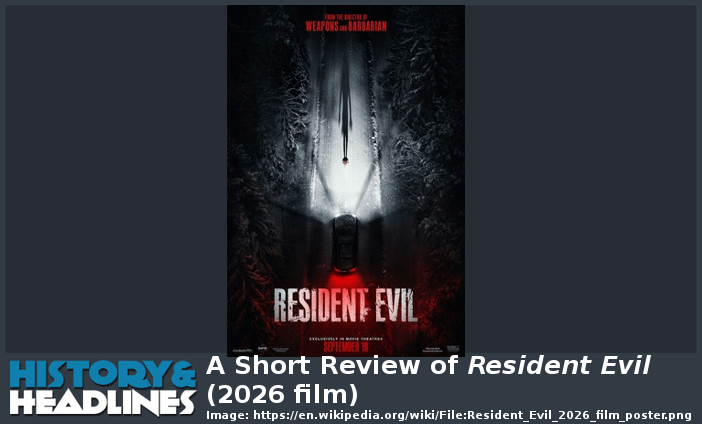
The featured image in this article is a poster for the film Resident Evil and the copyright for it is most likely owned by either the publisher or the creator of the work depicted. It is believed that the use of scaled-down, low-resolution images of film posters
- to provide critical commentary on the film in question or of the film poster itself, not solely for illustration
- where no free equivalent is available or could be created that would adequately give the same information,
- on a website indented primarily for educational purposes hosted on servers in the United States,
qualifies as fair use under the copyright law of the United States.