
A Brief History On August 27, 1982, far away from Anatolia, Justice Commandos of the Armenian Genocide killed Turkish diplomat Atilla Altıkat in Ottawa, Ontario, as vengeance for the Armenian Genocide of 1915. Time and distance do not always stop those bent on revenge, and we list a few of those incidents. Digging Deeper In 1943, the US conducted Operation Vengeance, sending P-38 fighters 435 miles to shoot down and kill Japanese Admiral Isoroku Yamamoto, the architect of the Pearl Harbor raid. From 1972 to 1973, Israel’s Mossad conducted Operation Wrath of God, revenge for the murders of Israeli athletes…
Author: Major Dan
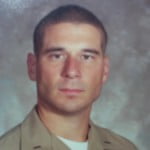
Major Dan
Major Daniel Zar is a retired veteran of the United States Marine Corps. He served during the Cold War and has traveled to many countries around the world. Prior to his military service, he graduated from Cleveland State University, having majored in sociology. Following his military service, he worked as a police officer eventually earning the rank of captain prior to his retirement.
Read More
A Brief History On August 26, 1972, the XX Olympiad, Summer Games portion, opened in Munich, West Germany. Historic for many reasons, this edition of the Olympics featured the first ever named mascot of an Olympic Games, a Dachshund named “Waldi.” Digging Deeper In 1932, a Scottish Terrier born in the Olympic Village in Los Angeles became an unofficial mascot, and in 1968, Mexico City gave us a Red Jaguar, although again, unofficially. Many mascots have been depictions of fauna endemic to the country or area the Olympics were being held at, and of course the Dachshund is a dog…
A Brief History On August 25, 1967, US Navy World War II pilot, George Lincoln Rockwell, was shot and killed by a former member of his hateful group. Digging Deeper Born to European American parents that worked as comedians, little was funny about George. His parents divorced when he was young, and he was later denied admission to Harvard. He did attend Brown University but left in 1938 to join the Navy as a pilot. He served the US Navy well during World War II, although he did not engage in combat. Recalled to active duty for the Korean War,…
A Brief History On August 24, 1998, science fiction and conspiracy theory met science fact when the first successful human implant of a radio tracker was tested in the UK. Digging Deeper Called “Radio-frequency identification, “or “RFID,” the device consists of a miniaturized radio transponder that when interrogated by a RFID “reader” sends identifying information to that reader, usually a coded number that is interpreted as whatever identity of person is assigned to the implant. Far from the conspiracy theory systems that allow satellites to observe and report on the location and movement of people with implants, for the device…
A Brief History On August 23, 1898, a new age of exploration began when the Southern Cross Expedition set sail for Antarctica in the aptly named ship, Southern Cross. Digging Deeper Thus began the Heroic Age of Antarctic Exploration, a British venture exploring the Southernmost part of the Earth, an era that ended in 1922. Inspired by previous Antarctic explorers, Norwegian born Carsten Borchgrevink first gazed on Antarctica from the deck of a whaling ship, prompting his desire for further exploration. Carsten pursued financing in Britain and succeeded in organizing the expedition with the Southern Cross, the first such visit…