

A Brief History
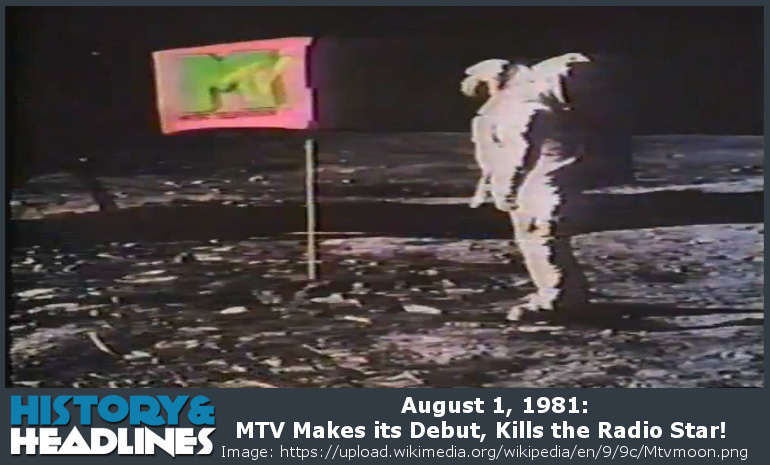
On August 1, 1981, the world of music and television changed forever when MTV made its debut on satellite and cable television, when John Lack announced, “Ladies and Gentlemen, Rock and Roll!” Playing in the background was video of the Space Shuttle Columbia and footage of Apollo 11. A theme song played in the background and then the very first MTV music video followed.
Digging Deeper
That first video, the answer to the trivia question, “What was the first MTV video?” was the ever so apropos “Video Killed the Radio Star” performed by The Buggles.
The television fans in New Jersey were the only audience for this momentous occasion. You might win a bet about knowing the second video ever shown on MTV if you know “You Better Run” by Pat Benetar was that second video.
Not only was the television station a hit, MTV made stars of otherwise unknown musical acts that were good at making videos but had not been getting air time on the radio. Some examples include The Human League, Men at Work, and Bow Wow Wow. British groups that had been making enjoyable videos also found a home on MTV and a new found appreciation for British Rock was launched.
The film clip of the Space Shuttle had played from Day 1 until 1986 when the Space Shuttle Challenger disaster shocked the world.
Originally a video DJ format, MTV evolved into a variety of types of shows, and digressed into social issues as well, which was ok for some viewers, but turned other previous watchers off. Those first VJ’s (video jockeys) became famous themselves, including Mark Goodman, JJ Jackson, Nina Blackwood, Martha Quinn and Alan Hunter. Not only did MTV feature all sorts of genre of Rock music and music that could hardly be considered Rock, old and new, it even showed the hilarious video parodies of Weird Al Yankovic. Nor did MTV shy away from any particular race when it came to music videos. African American performers found a mainstream venue for their product that reached all over America and the world, although the R&B crowd was just a tad late in getting in on the video action. Sadly, like everyone else, MTV could not make everyone happy, and some artists seethed about their music being shunned by MTV programmers (such as Rick James). Others, such as Andrew Dice Clay and Billy Idol got banned for off color performances. MTV was especially valuable to performers as a platform to debut a new song, and it also pioneered the showing of musical clips from movies.
All sorts of innovations followed, such as live concert broadcasts, reality shows (such as Jersey Shore), comedy, movies, cartoons (such as Beavis and Butthead) and of course, the MTV Awards. Plain old music videos became less of the programming. Not to worry, because MTV also launched “sister channels” featuring music videos such as VH1, MTV2, and CMT (country music).
Owned by entertainment giant corporation Viacom and headquartered in New York City, MTV is available on various satellite and cable television systems, over smart phone networks, on the Internet and TVPlayer. Over 92 million US households get MTV on their television (79%+ of all US homes)!
Question for students (and subscribers) to ponder: Do you have a favorite music video? If so, which one is it and why do you like it so much?
If you liked this article and would like to receive notification of new articles, please feel welcome to subscribe to History and Headlines by liking us on Facebook and becoming one of our patrons!
Your readership is much appreciated!
Historical Evidence
For more information, please see…
Marks, Craig and Rob Tannenbaum. I Want My MTV: The Uncensored Story of the Music Video Revolution. Plume, 2012.
The featured image in this article, MTV‘s first promo featuring public domain images of the Apollo 11 moon landing, is a screenshot of a copyrighted television program. As such, the copyright for it is most likely owned by the company or corporation that produced it. It is believed that the use of a limited number of low-resolution screenshots
- for identification of and critical commentary on the television program and its contents
- on an educational website hosted on servers in the United States,
qualifies as fair use under the Copyright law of the United States.