

A Brief History
On April 19, 1861, an angry mob with pro-secessionist intentions attacked US Army troops on the streets of Baltimore, an event known as The Baltimore Riot of 1861, or alternately as The Pratt Street Riot or even the more dramatic Pratt Street Massacre. Maryland, being a slave state at the onset of the American Civil War, was not surprisingly divided on whether or not to remain in the Union or join the Confederate States.
Digging Deeper
The dispute in Baltimore transcended state borders, and the protesters/rioters were not exclusively from Maryland, consisting of local “Copperhead” Democrats that opposed the waging of war against the seceding states and Southern sympathizers, some of which were from other Southern states. The soldiers sent to Baltimore to stamp out the protests were mainly militia from Massachusetts and Pennsylvania, a geographic fact sure to instill resentment on the part of Marylanders and other Southerners.

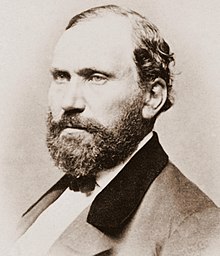
At the time, Baltimore was a major US city, and President Abraham Lincoln had only received one thousand of the thirty thousand votes cast in the city during the 1860 Presidential election. Obviously, Lincoln and his vow of maintaining the Union was not overly popular in Baltimore. Allan Pinkerton, the famous private eye and security expert, helped guard Lincoln from a rumored assassination plot causing Lincoln to sneak through Baltimore secretly on his way to his own inauguration in Washington, D.C. in March of 1861. In spite of the high level of anti-Union and anti-Lincoln feeling in Baltimore, there was the nation’s largest population of free African Americans (25,000) and a considerable abolitionist presence, further aggravating tensions in the city.
The Civil War had started on April 12, 1861, only one week prior to the riot. At the point of the start of the riot, the “War” had not yet resulted in any casualties (fatalities) from hostile actions or combat. That situation changed in Baltimore, when the Massachusetts and Pennsylvania militias were routed to their Washington, D.C. destination through Baltimore en-route to eventually go South to put down the rebellion. Word reached the US troops that their transit through Baltimore would be “resisted,” that transit being vulnerable due to painfully slow rail exchanges in the city, some of which required horses to pull rail cars onto other tracks. Soldiers were instructed to ignore taunts, jeers, and rocks thrown their way by protesters, but they were forced to march through the streets when protesters stopped the rail cars entirely.

The soldiers, now on foot, were attacked with “bricks, paving stones and pistols” by the mob, and fired at the rioters in self-defense. A mob like brawl began with 4 soldiers and 12 protesters eventually being killed in the melee until the soldiers and the Baltimore Police could restore order. An additional 36 soldiers were injured badly enough to be forced to remain in Baltimore for treatment instead of continuing with their units. An unknown number of protesters were injured. One of the soldiers killed in the riot, Private Sumner Needham, is often considered the first casualty of the American Civil War. His body was returned to Lawrence, Massachusetts for burial.

Smaller disturbances followed in the ensuing days, and several rioters were singled out for prosecution as agitators. More Union Army units were dispatched to Baltimore where martial law was declared, and order kept by force. The bloodshed and heavy handed suppression of the protests may have been the ignition source for the explosion of violence and combat at the start of the Civil War, the event inflaming passions on both sides.
Question for students (and subscribers) to ponder: Do you consider the Baltimore Riot of 1861 as the first bloodshed of the American Civil War? What are your thoughts on this tragic event and/or the events that precipitated it?
If you liked this article and would like to receive notification of new articles, please feel welcome to subscribe to History and Headlines by liking us on Facebook and becoming one of our patrons!
Your readership is much appreciated!
Historical Evidence
For more information, please see…
Catton, Bruce. The Civil War. Mariner Books, 2004.
Vulich, Nick. 1861: Civil War Beginnings (Civil War Year by Year). Amazon Digital, 2018.
The featured image in this article, “Massachusetts Militia Passing Through Baltimore”, an 1861 engraving of the Baltimore Civil War riots, is in the public domain in the United States. This applies to U.S. works where the copyright has expired, often because its first publication occurred prior to January 1, 1924, and if not then due to lack of notice or renewal. See this page for further explanation.