


A Brief History
On September 5, 1798, France instituted the Jourdan Law making military conscription the law of the land. Military drafts have never been popular with the masses that supply the cannon fodder and it is likely this law was no exception. Like the American and other national military drafts, this one discriminated against the poor and lower classes, leaving various exemptions available for the privileged. On September 5 and August 5 of 2014 we published lists of unpopular laws, and this time we are doing it again, with no significance to the order listed.
Digging Deeper
10. Right to Work vs. Mandatory Union Dues.
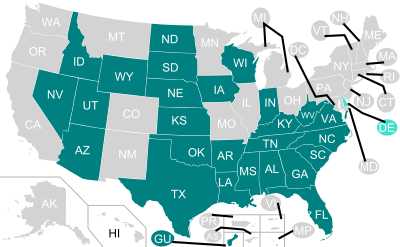
Union activism created a standard system where even if you refused to join the labor union, you had to pay dues anyway, although the union itself did not necessarily get the money. Often, employers would be required to deduct the money from your pay. This arrangement has come under fire from “right to work” states that allow workers to refuse union membership and refuse to have dues or the equivalent taken from their pay. This action has undermined the political and legal power of labor unions, and to the opinion of union supporters has greatly diminished the standard of working conditions and pay for workers. This issue is another largely Democrat vs. Republican debated issue that has torn apart the ranks of working people.
9. Common Core and No Child Left Behind Educational Standards.
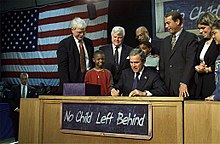
More proof that you really cannot make anyone happy, critics say these standards do not go far enough or go too far, are over-funded or under-funded. People that support these concepts where the Federal government is involved in education standards and mandates are opposed by those that believe each state should decide for themselves what their solution to education should be. Opponents resent “unfunded” mandates that the Federal government forces states to adopt and pay for themselves. Another complication in the issue of Education is the constant clamor for some sort of national law that takes seniority out of job security for teachers and institutes “merit pay” and “merit retention” instead, a concept hotly opposed by teacher’s unions.
8. The Patriot Act, etc.

In response to the 9/11 terrorist attacks of 2001, Congress passed a sweeping law that gave the government broad authority to detain prisoners without normal legal procedure, to gather information (your telephone calls and computer info, email, etc.) without warrants, a “no fly list” (that you could be on with no idea why you are not allowed to fly), rearranging the Intelligence community and various other intrusions into your privacy and finances. Creation of the Department of Homeland Security and the Transportation Security Agency were not part of the Patriot Act, but are similar in the amount of exasperation and opposition from large portions of the public. Every time you face long lines and play games with getting your passport renewed just to go to Canada or Mexico makes you long for the “good old days” before all these questionable security measures went into effect. Somehow, I do not feel safer when they confiscate my fingernail clippers at the airport.
7. Height, weight, age, physical performance Hiring Standards.
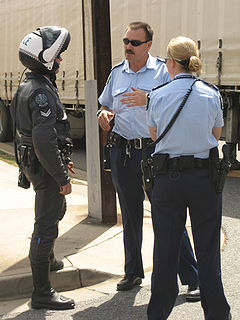
Women and small men have long complained that these standards have kept them out of jobs such as police officer and fire fighter. These standards were often imposed without regard to any real world justification other than “common sense” or a “gut feeling.” When the author became a police officer, 20/20 vision was required, although officers already on the job were allowed to continue if they wore glasses or contact lenses. It really did not make sense. Lawsuits and court rulings have gutted these types of rules, and even military airplanes have been required to fit a greater range of pilot height so as not to arbitrarily eliminate so many women from consideration as pilots. Defenders of such standards say that elimination of them waters down the ability of a military or police force (for example) to get their job done properly. If you believe that, be prepared to prove it scientifically!
6. Civil Service Laws that favor Military Veterans.

When the author got his job as a police officer he benefited from getting 10% additional points added to his test score for being a veteran. Especially today, with so many actual combat vets from the wars in the Middle East, many people support these rules, but even more people that do not get these extra points resent the “unfair” advantage that veterans get, even if those vets were not in combat or even overseas. Many government and even civilian jobs favor veterans, which of course makes a lot of non-veterans unhappy.
5. Handicap Parking Spaces.

When you see teenagers pile out of a car parked in a handicap parking space, do you not wonder if they are abusing their grandparent’s permit? When you see an overweight person wiggle out of a car in a handicap spot, do you wonder if the person is truly handicapped or just overweight and/or lazy? When you see excessive numbers of handicap spots at places such as Home Depot (or the local fitness center) where customers can be expected to be physically active, do you resent your longer walk to the door? The author knows a guy who got a handicap parking permit because he retired from work with a shoulder injury. Yes, to many, it probably seems ridiculous. Is a person with a bad gout attack, or with their leg in a cast is much more in need of that handicap spot than an old person that got the permit because of high blood pressure? (The author often observed elderly people park in handicap spots at the Mall just to go inside and take their exercise walks.) Of course, people in wheel chairs and the like might tell you they do not find enough handicap spots, either because there are not enough or because of the people with permits that do not really need them. Besides, most wheel chair bound people would be better off dropped off near the door and the non-disabled driver then going to park the car. This issue is another “Us vs. Them” issue between those with and without handicap permits.
4. Insanity Defense.

People were outraged when John Hinckley shot President Reagan early in his presidency and was ruled to be insane instead of being locked up forever in jail. You often hear proposals to change the law to some sort of “guilty, but insane” type of scheme, but the proposals do not seem to become law. So much public complaining goes on about these laws it is a wonder they still exist.
3. Blue Laws.

Once generally the way the US was run, Sunday was treated as “different” under the law, with many activities and types of sales illegal on Sunday in deference to the prevailing Christian religion of most Americans. Alcohol sales, stores being open, hunting and other activities were limited or banned. Of course, it was okay for churches to wake up non-believers with early Sunday morning bell ringing. The remnants of these laws still exist, and chafe the psyche of non-Christians across the land, creating a heated debate. After all, what if you were Jewish, 7th Day Adventist, Muslim or a Jehovah’s Witness, etc.? What if your holy day is Saturday, but you get no special consideration? It may not seem fair to you.
2. Voter ID.
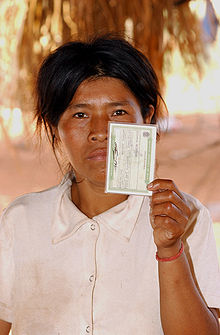
Mostly a conservative/Republican idea claimed to prevent voter fraud, liberal Democrats point out that voter fraud is so rare in the US that it is a non-issue, and that Voter ID laws exist only to disenfranchise poor, elderly, and minority voters that generally vote Democrat. Hotly debated and contested in courts, these laws have been a contentious topic for several years now, being compared to the old “literacy” laws and “poll taxes” of the Jim Crow days.
1. Welfare and Unemployment.
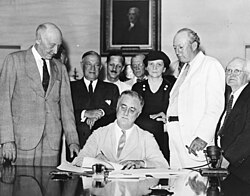
Using tax money from productive, working people to fund poor people and those suspected of “gaming” the system creates tremendous resentment by the taxpayers that are not exactly rolling in money themselves, let alone rich people that begrudge every dime someone other than themselves manages to get their hands on. On the other hand, many of the recipients of “The Dole” think they are being humiliated and shortchanged by inadequate amounts of money, unfair perception and portrayal of their financial plight, and unfair rules about eligibility. This example is truly one of the cases where you not only cannot make everyone happy, it seems we cannot make anyone happy.
Question for students (and subscribers) to ponder: What laws would you include in this Hall of Shame?
If you liked this article and would like to receive notification of new articles, please feel welcome to subscribe to History and Headlines by liking us on Facebook and becoming one of our patrons!
Your readership is much appreciated!
Historical Evidence
For more information, please see…
Lewis, J.A. SILLY, WACKY, CRAZY, FUNNY, TRUE LAWS!!! The Most Extensive Collection: Hundreds and hundreds and hundreds of incredible laws from the U. S. and around the world. Independently published, 2017.
The featured image in this article of Jean-Baptiste Jourdan is a faithful photographic reproduction of a two-dimensional, public domain work of art by Eugène Charpentier (1811-1890). The work of art itself is in the public domain for the following reason: this work is in the public domain in its country of origin and other countries and areas where the copyright term is the author’s life plus 100 years or less. This photographic reproduction is therefore also considered to be in the public domain in the United States.
You can also watch a video version of this article on YouTube: